02/09/2025


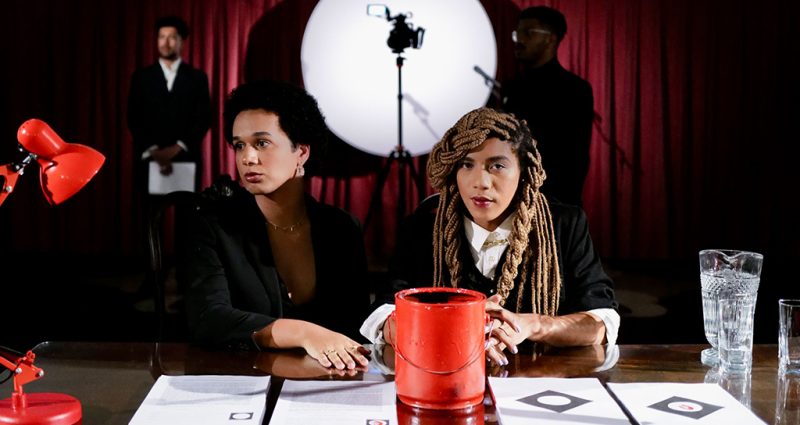
De que forma elementos factuais e ficcionais em torno da diáspora negra permeiam sua obra?
Fundamento meu trabalho em dois pilares: o arquivo e sua fabulação; e a ficção e seu potencial de futuro. O arquivo me permite fabular passados. A ficção me permite esquecer passados e ensaiar futuros. Em ambos os casos, meu único objetivo é me emancipar do tempo colonial. A Pretofagia, como batizei minha pesquisa, se realiza a partir da fome preta por passado, presente e futuro. Ela só pensa em se emancipar da escassez narrativa que o legado colonial deixou à cultura afrodiaspórica. Como dramaturgo, tenho proposto minhas cenas pretofágicas / cenas de emancipação para que as normas narrativas que fixam a negritude ao seu arquivo sejam destruídas. Pelo menos em cena. Sou otimista em minhas cenas. Afinal, como vou me emancipar sem esperança?
Por isso coleciono as línguas do público em troca das camisas: busco dar conta de um profundo vazio histórico do corpo negro em imagens coloniais
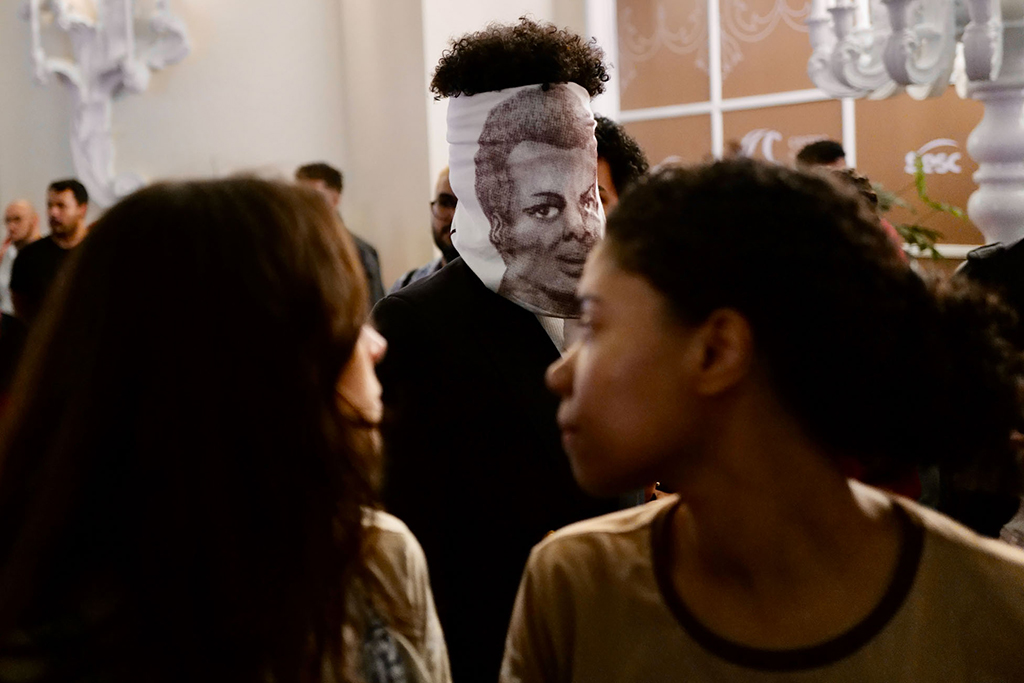
A figura de Anastácia atravessa sua obra e, em Negrociação, você propõe uma troca em torno de sua imagem. O que representa esse ato?
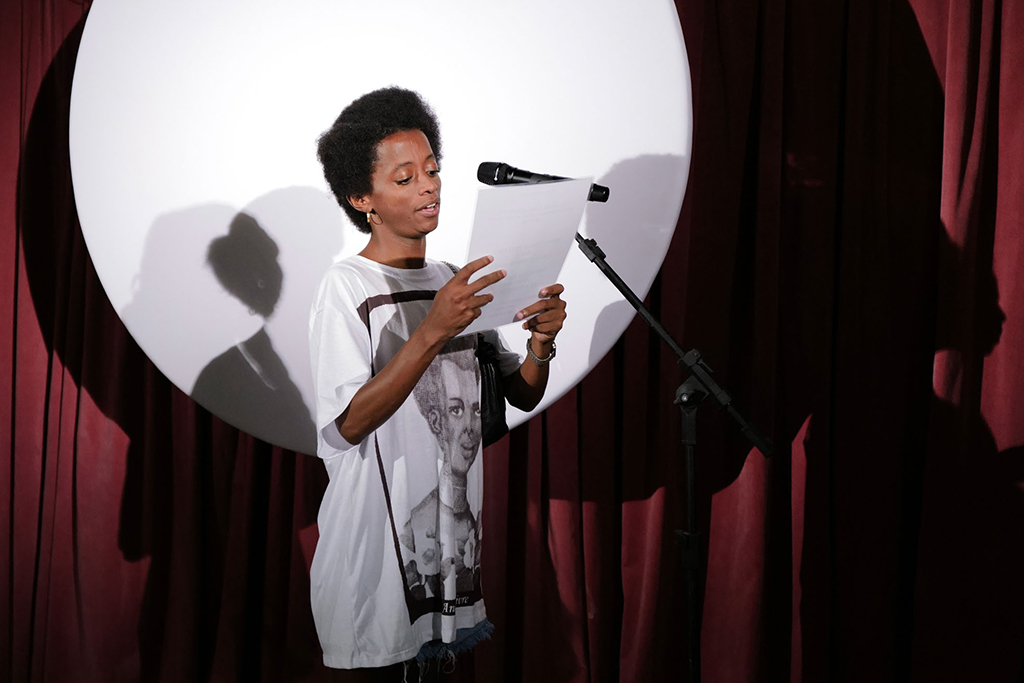
Em Monumento à Voz de Anastácia ou Anastácia Livre [2019], a máscara silenciadora de Anastácia não apaga a ideia de boca. Pelo contrário, a boca exerce o papel de antagonista da imagem. Sem a boca submissa, não há ficção branca. O que fiz foi me perguntar: “Como monumentalizar uma voz antagonizada historicamente e rehistoricizar a imagem?”. Foi preciso contar a ficção completa, descortinar a mítica. Para uma máscara de flandres tão real e etnográfica, era preciso uma boca tão, ou mais, real. Na batalha de ficções, a mítica branca se esfacelou. Nunca mais não haverá a boca insubmissa . Agora que há a boca, a Pretofagia pode ser realizada. A camisa de Anastácia Livre é requisitada desde a participação da cantora Linn da Quebrada no Big Brother Brasil, vestida com a imagem do meu trabalho. Mas eu decido não vender a camisa, pois a considero um bem devocional, não de consumo. Em 2022, eu escrevo Negrociação como uma forma de dramatizar a transação dessa imagem tão importante por outros tipos de capitais simbólicos. Todos temos línguas e com elas sentimos sabores, prazeres. Com elas podemos articular sons e palavras. Ações que Anastácia, e o tempo que ela representa, nunca conseguiu. Por isso coleciono as línguas do público em troca das camisas: busco dar conta de um profundo vazio histórico do corpo negro em imagens coloniais. Negrociação é sobre o acúmulo de outros tipos de capital, sobre novos protocolos e paradigmas de trocas inclusivas. Eu convoco um elenco para habitar um simulacro de repartição pública. De forma voluntária, o público assina um contrato para participar da cena.
Como você enxerga o papel da arte na sociedade atual e o que ela pode mobilizar ou revelar sobre nossos tempos?
Considero a arte um exercício de radicalidade e futurismo. Arte é um acordo radical entre quem faz e quem assiste. Como acredito que novos acordos podem, literalmente, impactar o mundo, sigo sendo artista e imaginando.
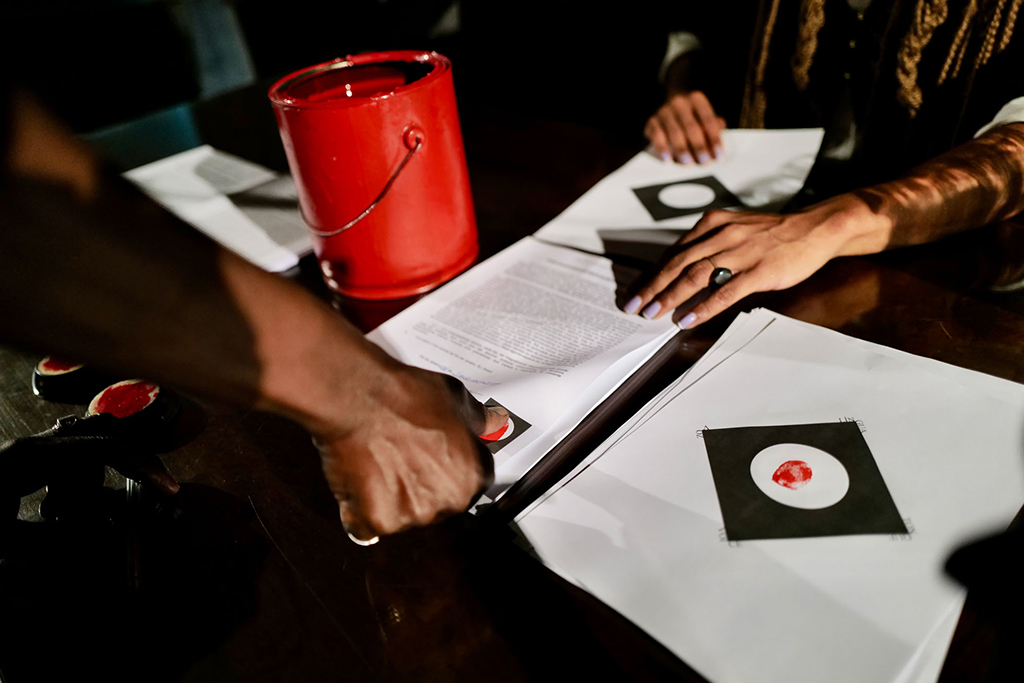
Parte da série de cenas pretofágicas de Yhuri Cruz, o trabalho investiga formas de dramatizar o trânsito de imagens históricas afrodiaspóricas entre pessoas negras e não negras. A performance é construída em torno de Anastácia, mulher escravizada no Brasil do século 18, conhecida por uma ilustração de seu rosto com uma máscara de flandres. Mais precisamente, parte de uma releitura dessa imagem, a obra Monumento à Voz de Anastácia, em que Yhuri libera a personagem da mordaça e lhe confere um sorriso. Acompanhado de quatro performers, o artista convida o público a um ato de troca: os participantes recebem camisetas de Anastácia livre e, de sua parte, permitem que se registrem suas línguas em vídeo, e suas vozes em áudio. O trabalho multiplica a imagem de Anastácia liberta conforme as pessoas circulam pelo espaço e, por meio do coletivo, cede à personagem a língua que lhe foi negada.
How do elements of fact and fiction surrounding the Black diaspora permeate your work?
My work is grounded in two pillars: the archive and its fabulation; and fiction and its potential for the future. The archive allows me to fable pasts. Fiction allows me to forget pasts and rehearse futures. In both cases, my only goal is to emancipate myself from colonial time. Pretofagia, as I have named my research, is based on the Black hunger for the past, present, and future. It is only concerned about emancipating itself from the narrative scarcity that the colonial legacy left to Afro-diasporic culture. As a playwright, I have proposed my Cenas Pretofágicas / Emancipation Plays so that the narrative norms that fix Blackness to its archives are destroyed. At least on stage. I am optimistic in my plays. After all, how can I emancipate myself without hope?
This is why I collect the tongues of the audience in exchange for T-shirts: I aim to account for a profound historical void of the Black body in colonial images
The image of Anastasia pervades your work, and in Negrociação [Negrotiation], you propose an exchange around her image. What does this act represent?
In Monument to the Voice of Anastasia or Free Anastasia [2019], Anastasia’s silencing mask does not erase the idea of the mouth. On the contrary, the mouth plays the role of antagonist to the image. Without the submissive mouth, there is no white fiction. What I did was wonder: “How can I monumentalize a historically antagonized voice and re-historicize this image?” It was necessary to tell the whole story, to unveil the myth. For such a real and ethnographic iron bit, a mouth that was just as real — or even more so — was needed. In the battle of fictions, the white myth crumbled. Never again will there not be an unsubmissive mouth. Now that there is a mouth, Pretofagia can be realized. The Freed Anastasia T-shirt has been in demand since singer Linn da Quebrada was on Big Brother Brazil wearing an image of my work. But I have decided not to sell it, as I consider it a devotional item, not a consumer product. In 2022, I wrote Negrociação [Negrotiation] as a way of enacting the transaction of this image, which is so important for other types of symbolic capital. We all have tongues, and with them we taste flavors and feel pleasures. With them we can articulate sounds and words. Actions that Anastasia, and the time she represents, never could carry out. This is why I collect the tongues of the audience in exchange for T-shirts: I aim to account for a profound historical void of the Black body in colonial images. Negrociação [Negrotiation] is about the accumulation of other types of capital, about new protocols and paradigms of inclusive exchanges. I call on a cast to inhabit a simulacrum of a government agency. Voluntarily, the audience signs a contract to take part in the scene.
How do you see the role of art in today’s society and what can it mobilize or reveal about our times?
I consider art to be an exercise in radicality and futurism. Art is a radical agreement between those who make it and those who watch it. As I believe that new agreements can literally impact the world, I continue to be an artist and to imagine.
This performance is part of Yhuri Cruz’s series Cenas Pretofágicas (Emancipation Plays) and investigates ways of enacting the movement of historical images of the African diaspora between Black and non-Black people. It is built around Anastasia, a woman enslaved in 18th-century Brazil, known for a portrait of her face wearing what was called a “slave iron bit.” It draws, more precisely, from a reinterpretation of this picture — the piece Monument to the Voice of Anastasia —, in which Yhuri frees the character from her gag and gives her a smile. The artist, along with four performers, invites the audience to an act of exchange: participants receive freed Anastasia T-shirts and, in return, allow to have their tongues filmed and their voices recorded. The performance multiplies the image of freed Anastasia as people walk around the space and, through this collective, grants the character the tongue that was denied to her.
Confira a entrevista com com DJ Michell.
Utilizamos cookies essenciais para personalizar e aprimorar sua experiência neste site. Ao continuar navegando você concorda com estas condições, detalhadas na nossa Política de Cookies de acordo com a nossa Política de Privacidade.
