02/09/2025


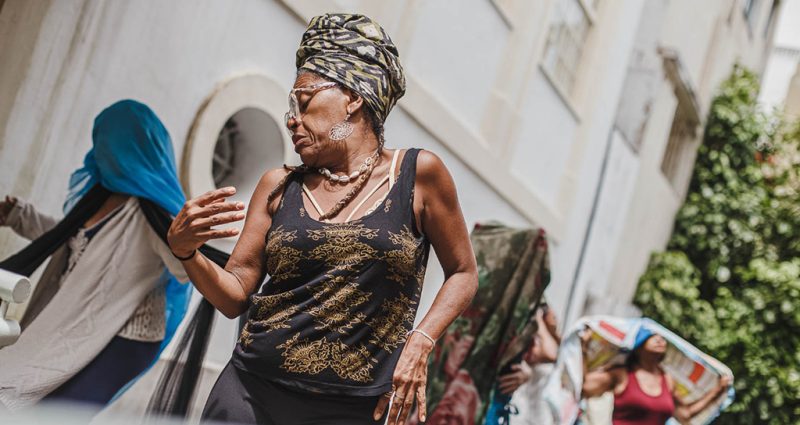
Por meio de práticas artísticas, o trabalho aborda o viver e o envelhecer. Qual o papel do corpo e do coletivo na expansão do imaginário em torno desses temas?
É no corpo que a gente reinventa a história sobre nós, aquela que queremos viver daqui pra frente. E é em companhia que podemos criar histórias que realmente façam sentido. Os lugares dançam quando a gente se move: movem-se os territórios, e nós somos corpo. É nos ambientes de convívio que podemos compartilhar e lembrar nossa melhor versão, e não existe saber sobre nós fora do território da feição, do sentir e do contato corpo a corpo. Criar “comunidades de vida”, como diz o filósofo e cientista político camaronês Achille Mbembe. Serenatas é sobre criar contextos para confiar, fazer alianças e se perguntar: o que ainda podemos juntas fazer daqui pra frente? É também aproveitar a outra para falar e sonhar o que é urgente para nós. Povoar o sonho uma das outras. Arte como lugar de alegria, para oxigenar assuntos e desafios próprios da dimensão do comum.
Quando a gente dança, podemos reinventar o presente. Dançar como um manifesto em movimento
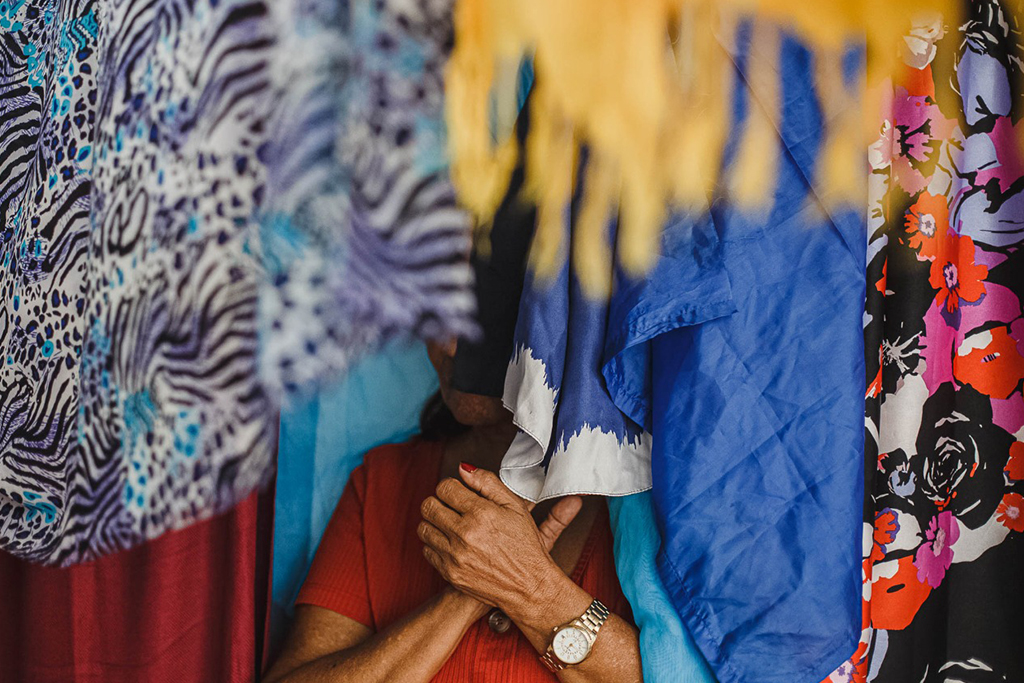
Da experiência realizando esse projeto, o que você percebe que acontece quando uma senhora dança como se houvesse amanhã?
Elas podem nascer em si mesmas. Quando a gente dança, podemos reinventar o presente. Dançar como um manifesto em movimento. Continuar sendo um corpo que pergunta, que faz escolhas, que continua a criar. Se sentir fazendo parte da vida entre outras vidas. Viver como força sem fim. É sobre reencantar-se!
Como você enxerga o papel da dança na sociedade atual e o que ela pode mobilizar ou revelar sobre nossos tempos?
Me interessa pensar a dança como um lugar para descansar. Fazer corpo que nasce, fazer corpo para o calor, fazer corpo para dançar, aloucada, desapessoada, encandeada. Dançar como oportunidade inesgotável de fazer escolhas. Dançar para estranhar o mundo. Se espantar e criar operações coletivas para desobedecer futuros convencionais. Estar aberta para o mundo. Viva! Danço como quem sonha. Sonhos povoados.
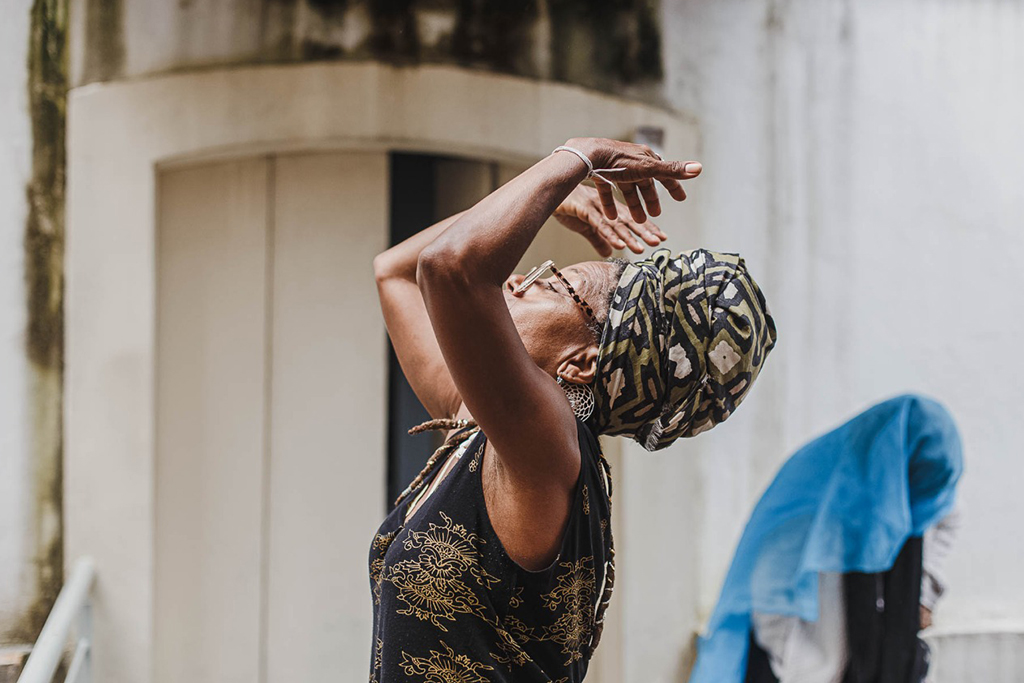
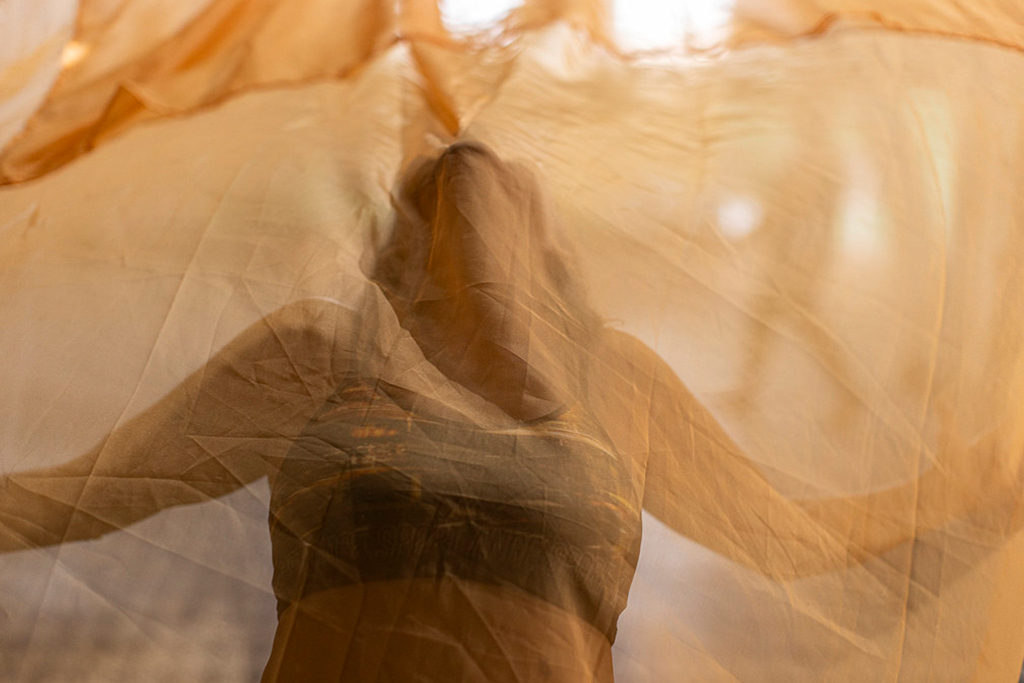
Mulheres de diferentes trajetórias, com 60 anos ou mais, suspendem suas rotinas e escolhem dançar como prática de vida nesta residência-espetáculo. Na Bienal, participantes de Campinas e um grupo de mulheres da Parnaíba e de Teresina, que já integram o projeto dirigido por Soraya Portela, trabalham juntas. Durante a convivência, elas habitam um ateliê de experimentação que combina práticas poéticas disparadoras de questões em torno de memória, identidade, sensualidade, erotismo, cuidado e pertencimento. A cena nasce de gestos cotidianos que, entrelaçados, compõem uma partitura viva: varais que sustentam tecidos afetivos, lenços, toalhas e colchas. Questionando o que acontece quando uma senhora abre os quadris e dança como se houvesse amanhã, a obra expande as imagens em torno do envelhecer. Articula, sobretudo, um manifesto pelo direito de continuar criando em qualquer idade.
Through artistic practices, the piece addresses living and aging. What is the role of the body and the collective in expanding the imaginary around these themes?
It is in the body that we remake the story about ourselves, the one we want to live from now on. And it is with others that we can create stories that really make sense. Places dance when we move: territories move, and we are bodies. It is in social environments that we can share and remember our best selves, and there is no knowledge about us outside the territory of appearance, feeling, and physical contact. Creating “communities of life,” as Cameroonian philosopher and political scientist Achille Mbembe says. Serenades is about creating contexts for trust, forming alliances, and asking ourselves: what can we still do together from here on out? It is also about taking others to talk and dream about what is urgent for us. Populating each other’s dreams. Art as a place of joy, to breathe life into issues and challenges that are common to all.
When we dance, we can remake the present. Dancing as a manifesto in motion.
From your experience carrying out this project, what do you notice happens when an older lady dances as if there were a tomorrow?
They can be born in themselves. When we dance, we can remake the present. Dancing as a manifesto in motion. Continuing to be a body that questions, makes choices, and continues to create. Feeling part of life among other lives. Living as an endless force. It’s about re-enchanting yourself!
How do you see the role of dance in today’s society and what can it mobilize or reveal about our times?
I am interested in thinking about dance as a place to rest. Making a body that is born, making a body for warmth, making a body to dance, deranged, unhinged, dazzled. Dancing as an inexhaustible opportunity to make choices. Dancing to make the world strange. Be amazed and create collective operations to disobey conventional futures. Be open to the world. Live! I dance like someone who dreams. Populated dreams.
Women from different backgrounds, aged 60 and over, stop their routines and choose to dance as a way of life in this residency-performance. At the Bienniale, participants from Campinas and a group of women from Parnaíba and Teresina, who are already part of the project directed by Soraya Portela, work together. During their time together, they inhabit an experimental studio that combines poetic practices that raise questions around memory, identity, sensuality, eroticism, care, and belonging. The scene is born from everyday gestures that, intertwined, compose a living score: clotheslines that hold up emotional fabrics, handkerchiefs, towels, and quilts. Questioning what happens when an elderly woman opens her hips and dances as if there were a tomorrow, the piece expands the images surrounding aging. Above all, it formulates a manifesto for the right to continue creating at any age.
Confira a entrevista com com DJ Michell.
Utilizamos cookies essenciais para personalizar e aprimorar sua experiência neste site. Ao continuar navegando você concorda com estas condições, detalhadas na nossa Política de Cookies de acordo com a nossa Política de Privacidade.
